


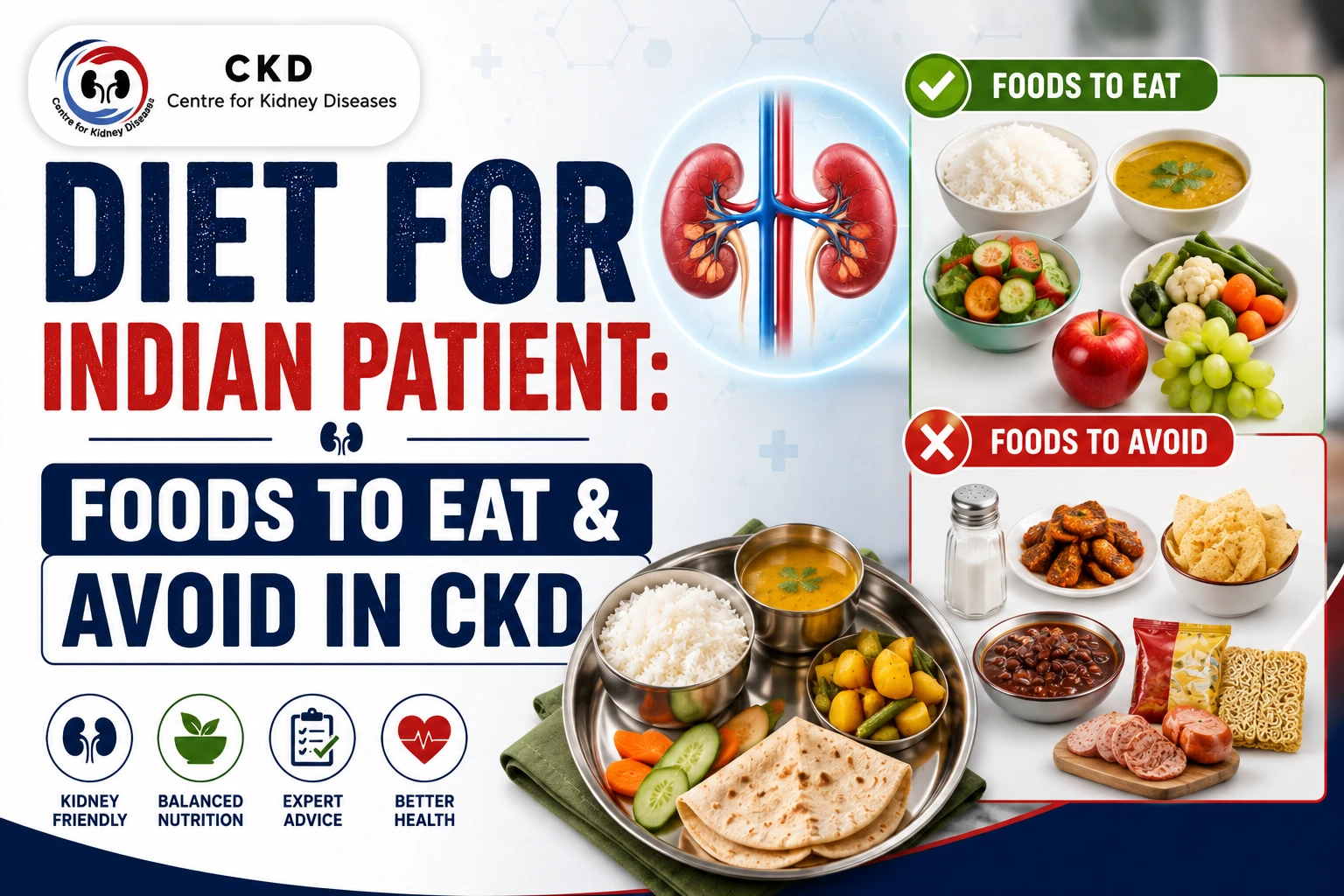
Kidney Diet for Indian Patients: What to Eat & Avoid at Every CKD Stage
Living with Chronic Kidney Disease (CKD) requires more than just medications. A well-planned diet plays a crucial role in slowing disease progression, managing symptoms, and maintaining overall health. A kidney diet for Indian patients focuses onassets/images/blog-img/5c8d5a46-7bb9-42d0-b65e-6cdca9702ea9-ms.webp choosing the right foods in the right quantities while considering kidney function, blood test results, and CKD stage.
Indian diets are rich in grains, pulses, spices, fruits, and vegetables, but some commonly consumed foods may need modifications when kidney function declines. With expert guidance from CKD Delhi, patients can understand how to make kidney-friendly food choices based on their individual condition.
Under the guidance of experienced nephrologist Dr. Shiv Chadha, patients receive personalized advice to manage CKD effectively through proper nutrition and lifestyle changes.
Why Is a Kidney Diet Important for CKD Patients?
When kidneys are not functioning properly, they may struggle to remove excess waste, fluids, and minerals from the blood. A customized kidney diet for Indian patients helps control important factors such as potassium, sodium, phosphorus, and protein intake.
The right diet can help:
- Maintain healthy blood pressure levels
- Reduce workload on the kidneys
- Control swelling and fluid retention
- Manage complications related to CKD
- Support better energy and overall well-being
However, dietary needs vary depending on CKD stage, kidney function, and other health conditions like diabetes or hypertension.
CKD Stage 1 & Stage 2: Focus on Kidney Protection
In the early stages of CKD, the goal is to protect existing kidney function and prevent further damage. Most patients do not require severe dietary restrictions but should focus on balanced eating habits.
Foods to Include
- Fresh homemade meals with limited salt
- Whole grains in controlled portions
- Vegetables recommended by a healthcare professional
- Healthy fats like olive oil and limited amounts of nuts
- Adequate hydration as advised by your doctor
Foods to Limit
- Processed foods
- Packaged snacks
- Excess salt and pickles
- Sugary beverages
Early dietary changes can make a significant difference in slowing CKD progression.
CKD Stage 3: Managing Protein, Potassium, and Phosphorus
During Stage 3 CKD, kidney function decreases further, and diet planning becomes more important. A proper kidney diet for Indian patients should be designed according to laboratory reports.
Patients may need to monitor:
Protein Intake
Requirements are adjusted according to kidney function and lab results
Potassium Levels
High-potassium foods may need to be limited when levels rise
Phosphorus-Rich Foods
Dairy and certain foods may be restricted based on phosphorus content
Sodium Consumption
Reducing hidden sodium in packaged and processed foods matters
Foods often limited include bananas, oranges, and coconut water if potassium levels are high, dairy products in excessive amounts due to phosphorus content, and packaged and processed foods containing hidden sodium. A nephrologist can help determine which foods are suitable based on kidney function.
CKD Stage 4 & Stage 5: Advanced Kidney-Friendly Nutrition
In advanced CKD stages, dietary management becomes more personalized. The kidneys have limited ability to remove waste products, making food choices extremely important. A kidney-friendly diet may include:
- Controlled protein intake as recommended
- Low-sodium meals
- Proper fluid management
- Potassium and phosphorus restrictions when required
Patients should avoid self-planning diets because unnecessary restrictions can lead to weakness, malnutrition, and other health problems.
Foods to Avoid in a Kidney Diet for Indian Patients
While every patient has different requirements, many CKD patients are advised to limit:
- High-salt foods like chips, papad, pickles, and processed snacks
- Fast food and restaurant meals
- Excessive amounts of red meat
- Foods high in phosphorus and potassium without medical advice
- Sugary foods, especially for patients with diabetes
It is important to remember that a kidney diet is not about completely avoiding food groups but about maintaining the right balance.
How CKD Delhi Helps Patients Manage Kidney Health
At CKD Delhi, patients receive comprehensive guidance for managing chronic kidney disease through advanced medical care, dietary recommendations, and personalized treatment planning. Dr. Shiv Chadha focuses on helping patients understand their kidney condition and follow practical lifestyle changes that support long-term kidney health.
A personalized approach ensures that dietary recommendations match the patient's CKD stage, medical history, and daily lifestyle.
Conclusion
A properly planned kidney diet for Indian patients can play an important role in managing CKD and protecting kidney function. From early-stage kidney disease to advanced CKD, making informed food choices can help control complications and improve quality of life.
Every CKD patient has unique nutritional needs, so professional guidance is essential before making major dietary changes. With expert support from CKD Delhi and Dr. Shiv Chadha, patients can follow a safe and effective kidney-friendly lifestyle.
If you or your loved one is looking for expert guidance on CKD management and a personalized kidney diet plan, consult CKD Delhi today for comprehensive kidney care and support.
Frequently Asked Questions
❓ What is the best kidney diet for Indian patients with CKD?
- The best kidney diet depends on CKD stage, kidney function, and health conditions. Generally, it includes controlled salt, proper protein intake, and monitoring potassium and phosphorus levels.
❓ Can CKD patients eat Indian food?
- Yes, CKD patients can enjoy Indian food with proper modifications. Portion control and selecting kidney-friendly ingredients are important.
❓ Which foods should kidney patients avoid?
- Foods high in sodium, excessive potassium, phosphorus-rich foods, processed items, and packaged snacks may need to be limited depending on kidney function.
❓ Is protein harmful for CKD patients?
- Protein requirements vary by CKD stage. Too much protein may increase kidney workload, but adequate protein is necessary to maintain health.
❓ Can diet reverse Chronic Kidney Disease?
- Diet cannot completely reverse CKD, but a proper kidney-friendly diet can help slow progression, manage symptoms, and support better kidney health.
❓ Why choose CKD – Center for Kidney Diseases?
- CKD – Center for Kidney Diseases provides specialised kidney care led by Dr. Shiv Chadha, offering comprehensive diagnosis, personalised diet plans, and long-term management for every CKD stage.
Book Your CKD Consultation Today
Get a personalized kidney diet plan built around your CKD stage and lab reports. Visit CKD – Center for Kidney Diseases and consult Dr. Shiv Chadha for expert, evidence-based nutrition guidance.
Contact Dr. Shiv Chadha Today →